

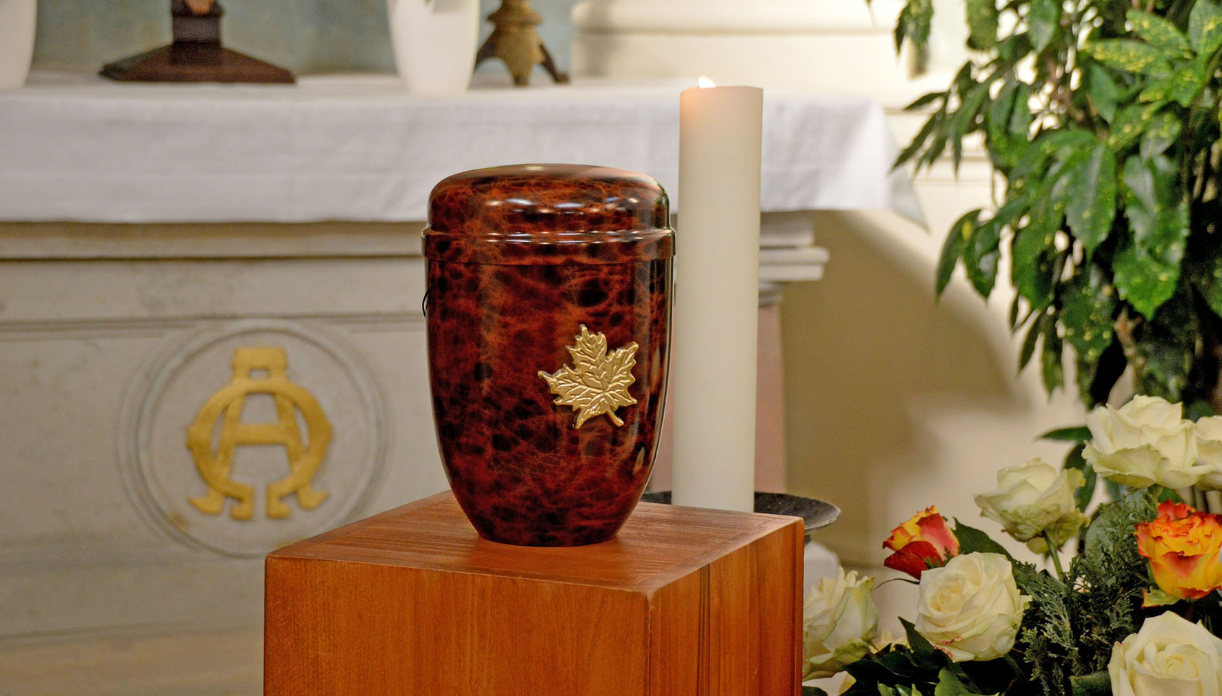
Choosing cremation urns can be one of those decisions that feels unexpectedly emotional. Whether you’re planning ahead for yourself or honoring someone you’ve just lost, the choice carries more weight than people expect.
This guide simplifies what you need to know—materials, sizes, personalization, and pricing—so you can make a decision with clarity, not confusion.
Let’s start at the beginning.
What an Urn Is (and What It’s For)
Most people think of a single, decorative container when they hear the word urn. But there are actually a few types to know about:
- Primary urn: The main container for ashes, used for display, burial, or placement in a columbarium niche.
- Keepsake urn: A smaller version, meant to hold a portion of ashes—often shared among family members.
- Temporary container: What cremated remains are typically returned in, before a permanent urn is selected.
Where the urn will go—a home, cemetery, niche, or scattered site—should guide your choice more than looks alone.
Start With the End Plan: Home, Cemetery, Burial, or Scattering
The best urn for your family depends heavily on the final placement plan. Here’s how that breaks down:
- If kept at home: Many families choose wood urns for their warmth and appearance. Consider durability, especially if children or pets are around. Some also look for urns with locking lids or felt bases for added security.
- If placed in a columbarium: Check niche dimensions before purchasing. Metal urns and marble urns often fit the aesthetic of these spaces, but size and rules vary by cemetery.
- If buried: You’ll likely need a burial vault or liner. Some materials (like metal or marble) are more suitable underground; others, like wood, may not be accepted without protective encasement.
- If ashes will be scattered: Scattering urns are designed for portability and clean dispersal. They may not be kept long-term, but they serve a meaningful purpose in the moment.
Understanding Urn Sizes: How to Choose the Right Capacity
When selecting cremation urns, the most important number is capacity, usually measured in cubic inches.
Here’s a quick guide:
- Adult urns: Standard size, typically holds the ashes of one adult.
- Companion urns: Designed for two individuals, often spouses.
- Keepsake urns: Smaller, used when ashes are divided or when someone wants a small token at home.
Common mistakes? Assuming height equals capacity. Always check the internal volume. And if you’re placing the urn in a niche, confirm exact size limits ahead of time.
Materials Explained: Pros, Cons, and Best Use Cases
Urns come in a wide variety of materials—each with their own aesthetic and functional traits.
Wood Urns
- Popular for home display
- Offer warmth, character, and craftsmanship
- May require extra care over time (humidity, handling)
Families choose wood urns for their classic beauty. They’re often handcrafted, with smooth finishes and options like cherry, walnut, or oak.
Metal Urns
- Known for strength and longevity
- Wide range of finishes (brushed, polished, enameled)
- Typically heavier and more durable
Metal urns are a go-to for cemetery placement and niches. They’re also ideal when families prioritize durability with a modern or elegant look.
Marble Urns
- Distinctive, timeless appearance
- Substantial weight—feels “permanent”
- May be heavier to move or adjust
Marble urns are often chosen for their beauty and permanence. They tend to cost more but are well-suited for display, burial, or columbarium settings.
Personalization Options: Making It Meaningful Without Overcomplicating It
Many families want to personalize urns in a way that honors a life—but also feels tasteful and lasting.
Some of the most common options:
- Engraved names, dates, and short messages
- Religious or cultural symbols
- Custom emblems (military, sports teams, hobbies)
- Photo panels or inlaid designs
You can find both customized urns made to order, and pre-designed urns with optional engraving. Turnaround time matters here—especially if there’s a memorial or burial date approaching.
Urn Prices: What Impacts Cost (and What Doesn’t)
Urn prices vary, but here’s what typically drives cost:
- Material: Wood, metal, and marble each sit in different price tiers.
- Craftsmanship: Handcrafted or artistic urns may carry premium pricing.
- Customization: Engraving, photo inlays, and special designs add to cost.
- Size: Companion urns and larger models tend to cost more.
- Brand/style: Designer or boutique urns often reflect branding, not just quality.
Don’t assume price always equals value. Look for clear warranty terms, return policies, and engraving accuracy guarantees.
Common Questions Families Ask
“Do we need an urn right away?”
Not always. Crematoriums provide temporary containers, giving you time to decide.
“Can one urn hold two people?”
Yes—a companion urn is designed for that purpose.
“What if we’re dividing ashes among family?”
Keepsake urns or small jewelry vessels are available for sharing remains respectfully.
“What size fits a columbarium niche?”
It varies. Always check with the cemetery before purchasing.
“Can we personalize later?”
Sometimes, but engraving is easiest and most accurate when done before the urn is filled.
Practical Checklist: Choose an Urn in 10 Minutes
- Confirm final placement plan (home, burial, scattering, columbarium)
- Check required capacity (standard, companion, keepsake)
- Choose a material: wood, metal, or marble
- Decide on personalization level
- Confirm timeline and budget
A Choice That Honors a Life—With Clarity and Confidence
There’s no single “right” urn—only the one that best fits your family’s wishes, placement plan, and budget. Whether you’re drawn to the simplicity of metal urns, the warmth of wood urns, or the elegance of marble urns, what matters most is that it feels respectful and intentional.
If you’re beginning to research cremation urns, start by confirming where it will be placed. From there, shortlist two or three options that meet your needs for size, material, and personalization.
You can take your time—and still move forward with your cremation planning with confidence.